
Our Blog
- Home
- Blog
March 9, 2026
Blog
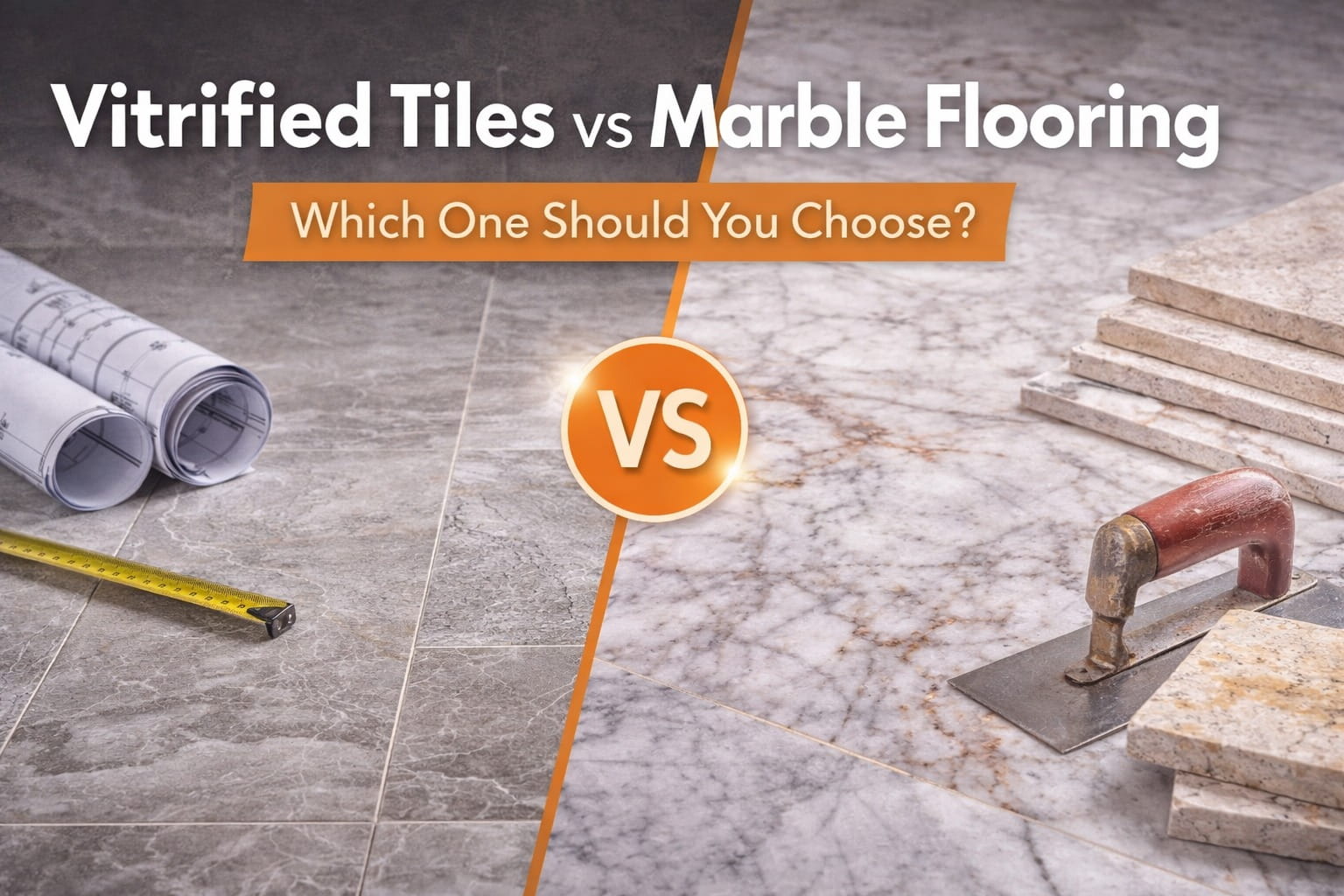
What flooring will you choose for your Mumbai apartment ? Vitrified Tiles vs Marble Flooring
Flooring is one of the most important decisions when designing a home. It influences the overall aesthetic, durability, maintenance, and long-term value of your space. In cities like Mumbai, where apartments face challenges such as humidity, limited space, and high usage, choosing the right flooring material becomes even more crucial.
Two of the most popular flooring options for modern homes are vitrified tiles and marble flooring. Both offer unique advantages, but they differ significantly in terms of cost, maintenance, durability, and appearance.
In this guide, we will compare vitrified tiles and marble flooring to help you decide which one is best suited for your Mumbai apartment or bungalow.
What Are Vitrified Tiles?
Vitrified tiles are engineered ceramic tiles made by combining clay, silica, quartz, and feldspar at extremely high temperatures. This process makes them dense, durable, and highly resistant to water absorption.
Because of their uniform finish and variety of designs, vitrified tiles have become a popular choice for modern apartments and residential projects in Mumbai.
Advantages of Vitrified Tiles
- Low Maintenance
Vitrified tiles are non-porous, meaning they do not absorb moisture easily. This makes them ideal for Mumbai’s humid climate and reduces the chances of stains or damage. - Wide Range of Designs
They are available in multiple finishes such as glossy, matte, marble-look, textured, and large slabs, allowing homeowners to achieve luxury aesthetics at a lower cost. - Affordable Option
Compared to marble, vitrified tiles are significantly more economical, making them suitable for budget and mid-range interior design projects. - Easy Installation
Tiles are easier to install and replace compared to natural stone flooring. - Scratch and Stain Resistance
Vitrified tiles are durable and resistant to scratches, making them suitable for high-traffic areas like living rooms and hallways.
Disadvantages of Vitrified Tiles
- Joints between tiles may be visible.
- If one tile cracks, it needs replacement.
- It may not provide the same natural luxury feel as real marble.
What Is Marble Flooring?
Marble is a natural stone formed from limestone under high pressure and temperature. It has been used in architecture for centuries and is known for its luxurious and timeless appearance.
In premium homes and luxury residences in Mumbai, marble flooring is often chosen to create an elegant and sophisticated interior.
Advantages of Marble Flooring
- Natural Luxury Appearance
Marble offers a unique natural pattern and texture that cannot be replicated perfectly by artificial materials. - Long-Lasting Material
With proper maintenance, marble flooring can last for decades and even increase the property value of your home. - Cool Surface
Marble remains naturally cool, which can be comfortable in warmer climates. - Seamless Finish
Large marble slabs can create a more seamless and premium flooring look compared to tiles.
Disadvantages of Marble Flooring
- High Cost
Marble is significantly more expensive than vitrified tiles, especially premium varieties like Italian marble. - High Maintenance
Marble is porous and can absorb liquids, making it prone to stains if not sealed properly. - Requires Regular Polishing
To maintain its shine, marble floors require periodic polishing and sealing. - Installation Complexity
Marble installation requires skilled labor and careful handling.
Vitrified Tiles vs Marble Flooring – Comparison Chart
Feature | Vitrified Tiles | Marble Flooring |
Material Type | Man-made tile made from clay, silica, quartz and feldspar | Natural stone formed from limestone |
Appearance | Available in many designs, textures and marble-look finishes | Natural veins and patterns with luxurious appearance |
Cost (Mumbai Approx.) | ₹70 – ₹280 per sq ft | ₹250 – ₹1500+ per sq ft depending on type |
Maintenance | Very low maintenance | Requires regular polishing and sealing |
Water Absorption | Very low (non-porous) | Higher absorption (porous) |
Stain Resistance | Highly stain resistant | Can stain easily if not sealed |
Durability | Durable and resistant to scratches | Very strong but can chip or crack |
Installation Time | Quick and easy installation | Time-consuming installation |
Repair / Replacement | Damaged tile can be replaced easily | Repair is difficult and expensive |
Lifespan | Around 15–20 years with proper care | 25+ years with maintenance |
Design Variety | Wide range of colors, patterns and finishes | Limited to natural patterns |
Best Used In | Apartments, kitchens, bedrooms, living rooms | Luxury homes, villas, premium interiors |
Overall Value | Budget-friendly and practical | Premium and luxurious option |
Vitrified tiles are generally more affordable and easier to maintain, while marble provides a natural, luxurious look but requires higher investment and upkeep.
Recent Post
Let’s Work!
Interior designing & build

312, B2B Agarwal business center, D’Monte Lane, kanchpada, Malad West, Mumbai, Maharashtra 400064
Quicklinks
Gallery


